
A.R. Rahman says Hindi film industry has changed over past eight years
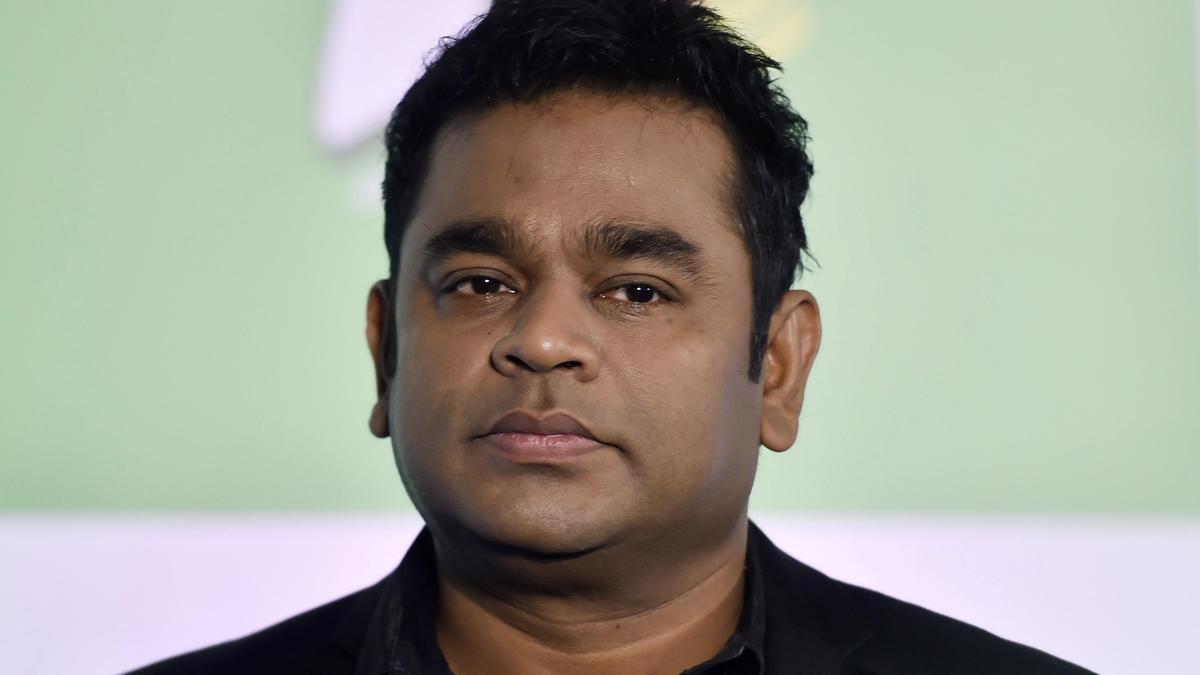
Less work has been coming his way, says celebrated music composer A.R. Rahman, attributing it to a power shift within the Hindi film industry in the last eight years and also perhaps to “a communal thing,” though one not in his face.
It comes to him as “Chinese whispers,” the Oscar winner told BBC Asian Network in an interview.
“I’m not in search of work. I want work to come to me; the sincerity of my work to earn things. I feel it’s a jinx when I go on in search of things,” he said.
Asked if he faced any prejudice in the Hindi film industry when he started out in the 1990s, Rahman said, “Maybe I didn’t get to know all this stuff. Maybe God concealed all this stuff. But for me, I never felt any of those, but the past eight years, maybe, because the power shift has happened.”
Less work has been coming his way, says celebrated music composer A.R. Rahman, attributing it to a power shift within the Hindi film industry in the last eight years and also perhaps to “a communal thing,” though one not in his face.
It comes to him as “Chinese whispers”, the Oscar winner told BBC Asian Network in an interview.
“I’m not in search of work. I want work to come to me; the sincerity of my work to earn things. I feel it’s a jinx when I go on in search of things,” he said.
Asked if he faced any prejudice in the Hindi film industry when he started out in the 1990s, Rahman said, “Maybe I didn’t get to know all this stuff. Maybe God concealed all this stuff. But for me, I never felt any of those, but the past eight years, maybe, because the power shift has happened.”
“People who are not creative have the power now to decide things, and this might have been a communal thing also, but not in my face. It comes to me as Chinese whispers that they booked you, but the music company went ahead and hired their five composers. I said, ‘Oh, that’s great, rest for me, I can chill out with my family,” he added.
The 59-year-old said he was the first South Indian composer to enter the Hindi film industry and survive it.
“It’s a whole new culture, no other South Indian composer till then. Mr. Ilaiyaraaja had made a couple of movies, but they were not mainstream. So for me to cross and them embracing me was a huge rewarding experience.”
Rahman said while his music for Mani Ratnam’s classics “Roja” (1992), “Bombay” (1995), and “Dil Se..” (1998) became popular, he credits Subhash Ghai’s 1999 musical hit “Taal” for making him a household name in north India.