
Envoy Visits Descendants of Sanghamitta Entourage
Sanghamitta Maha Theri traveled from India to Sri Lanka in 236 BC, during the reign of King Devanampiyatissa, arriving in Sri Lanka with a sapling from the sacred Sri Maha Bodhi tree on a full moon Poya Day.
Acclaimed research works such as Sinhala Bodhi Wanshaya[Wilgammula Sanga Raja Thera, S. P. (1964). (P. Pangnananda Thera, Ed.). Rathnakara Ltd.] mentions that she was accompanied by an entourage consisting of Bhikkhunis, princes, and craftsmen. Some among the latter were entrusted with the care, protection, and veneration rituals of the sacred Maha Bodhi sapling.
They settled down in villages around Tissa Wewa, close to temples that eventually gave names to the settlements such as Vihara Bulankulama, Vihara Palugama, Vihara Kallanchiya, and Vihara Medawachchiya.
Based on the advice of Arhat Mahinda, the King is said to have asked subsequent generations of the lineage of Prince Bodhi Guptha and Prince Sumitha to perform rituals for the sacred tree.
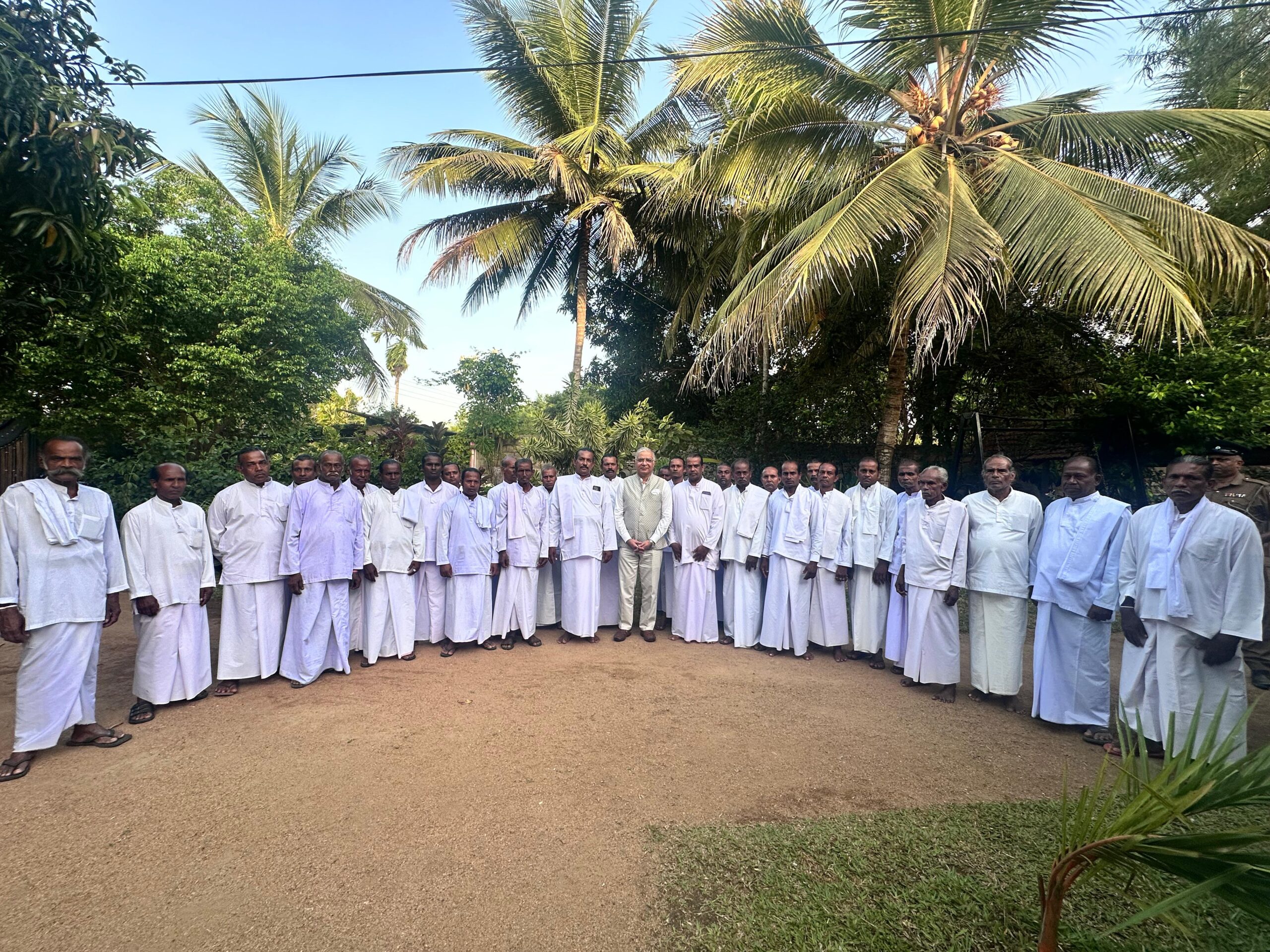
During his visit to the North Central Province, the High Commissioner of India to Sri Lanka, Santosh Jha, visited Vihara Kallanchiya and met with the Maha Duraya, Mr. Jayawardhana, and the heads of the nine villages responsible for safeguarding the sacred Maha Bodhi tree in the current generation.
Mr. Jayawardhana explained to the High Commissioner that they belong to the lineage of Prince Bodhi Guptha. Their forefathers had told them that the members of the original entourage accompanying Sanghamitta Maha Theri hailed from North India. He emphasised that each generation of the families in the nine villages had dutifully and reverently accepted the responsibility from the preceding one.
The High Commissioner conveyed deep respect and admiration for the dedication with which the families had undertaken the revered tasks over generations. He highlighted that they represented one of the most unique links of the shared Buddhist heritage between India and Sri Lanka, and the profound people-to-people connection between the two countries spanning millennia. He reaffirmed India’s commitment to continue to strengthen further the special and robust cultural ties between the two countries.
Anuradhapura Atamasthanadhipathi, Most Ven. Pallegama Hemarathana Thero, perhaps, best summed up the significance of the unique interaction.
Aware that the present High Commissioner of India is from Bihar—one of the regions from which the members accompanying Sanghamitta Maha Theri are believed to have hailed—he conveyed to the Maha Duraya and the Heads of the nine villages that ‘they are receiving a visit from their relative’.